Language Learning Apps Are Bad Games. So I Built a Better One by Directing AI Agents.
By MobileVibe Team · July 22, 2026 · 5 min read

Language Learning Apps Are Bad Games. So I Built a Better One by Directing AI Agents.
I can happily lose an hour dragging letter tiles around in a word game. I cannot make it through a week of a language-learning app. For a long time I assumed that was a personal failing - insufficient discipline. Eventually I decided it was the apps, and since I could now build software about as fast as I could describe it, I built the alternative I wanted. This is the story of that build, and of what it taught me about vibe coding a real game with AI agents.
Quick answer
You can build a genuine game with AI coding agents in 2026 by keeping the design judgment yourself and delegating the implementation to agents running on your machine. I prototyped a word game called Cadabra Tiles - vocabulary learning hidden inside real gameplay - by directing agents through MobileVibe. The hard part was never the code. It was getting the game design right, and fast iteration is what made that possible.
Why language apps fail as games
Most language apps aren’t games. They’re quizzes wearing a game costume. The tell is where the motivation comes from: streaks, points, badges, a cartoon character guilt-tripping you. Those are extrinsic motivators bolted onto the outside of a fundamentally un-fun activity. They reward compliance, not understanding, and they punish you for having a life - miss a day and you’re penalized, as if learning a language were a debt you’re servicing.
Real games don’t work that way. A good word game doesn’t need to guilt you into a second round; you want the second round because the core loop is satisfying on its own. The motivation is intrinsic - it comes from the play itself. That’s the thing language apps keep failing to build, because they start from a curriculum and try to decorate it into a game.
The reversal: game first, learning hidden inside
So I inverted the usual approach. Instead of taking educational content and gamifying it, I started with a genuinely fun word game and hid the vocabulary learning inside it.
In Cadabra Tiles you manipulate letter tiles to form words under escalating constraints - the part I’d happily do for an hour anyway. The twist: when you make a valid word, you confirm you actually understand it by picking the correct translation, with no hints. Get it wrong, and that word is quietly tracked and resurfaces later so you get another shot at it. Crucially, there is no separate study mode. There’s no moment where the game stops and the “learning” starts. Vocabulary acquisition happens incidentally, as a side effect of play you were enjoying regardless. You’re not studying between rounds of a game - the game is the studying, and you can’t feel the seam.
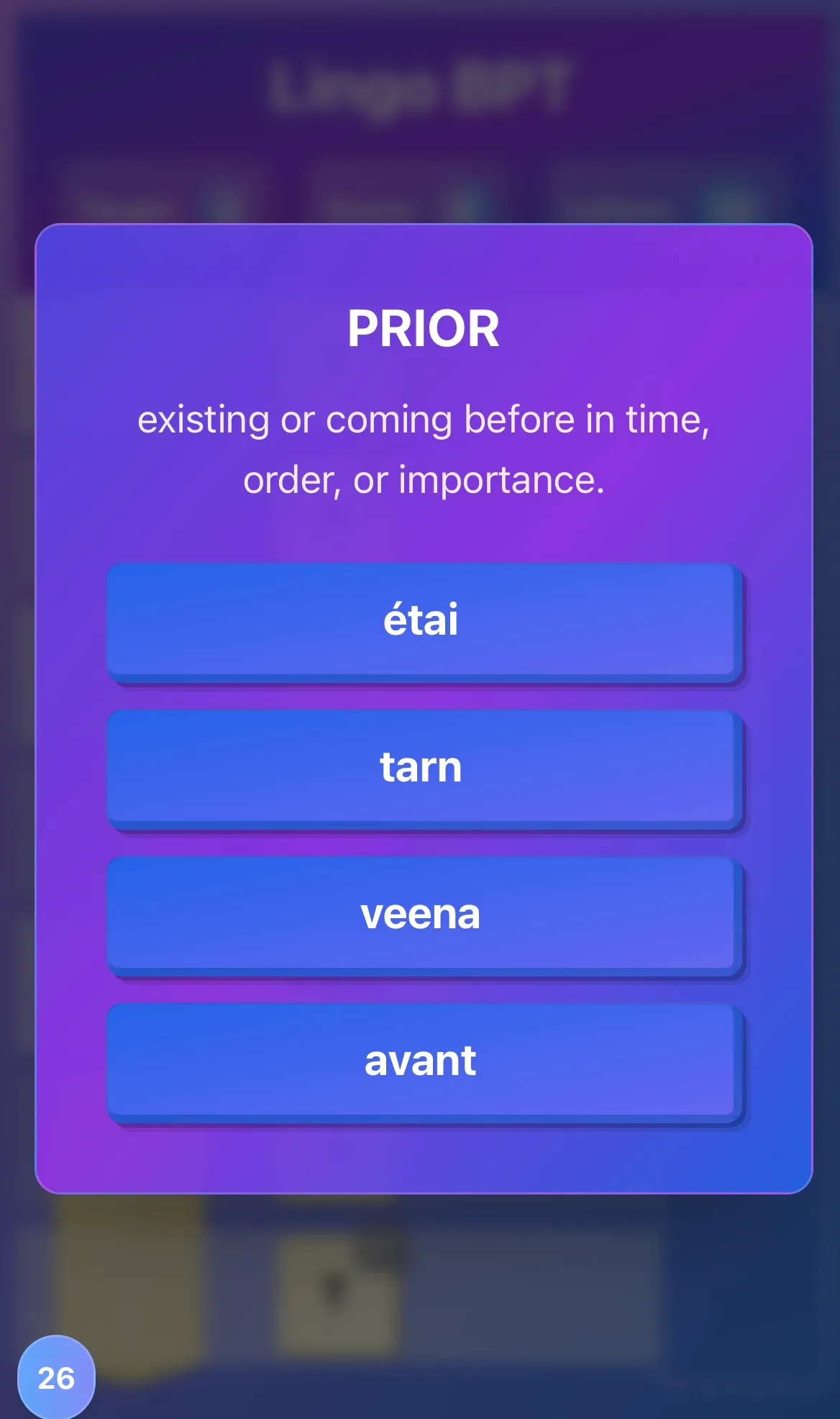 Form a valid word, then confirm you actually know it by picking the right translation - no hints. Miss it, and the word quietly resurfaces later.
How AI agents made the build possible
Here’s the part relevant to anyone who builds software: the code was never the bottleneck. Tile mechanics, word validation, a translation-confirmation step, spaced resurfacing of missed words, support for several languages - none of that is hard to implement. It’s hard to get right, and “right” only reveals itself when you can play it.
That’s where directing agents changed the process. I could describe a mechanic, have an agent build it on my machine, play it within minutes, and feel immediately whether it was fun. Most weren’t - the first version of the constraint system was tedious, an early scoring idea killed the flow. Because each change was a short conversation with an agent rather than a day of implementation, I could afford to build the bad versions, feel why they were bad, and throw them away. Game design is almost entirely that loop: build, play, judge, discard, repeat. Compress the “build” step from days to minutes and you can run the loop enough times to actually find the fun.
The alpha already supports Arabic, Chinese, French, Hebrew, and Spanish - breadth that would normally be a slog, handled by agents while I stayed focused on whether the core loop held up. This is the same division of labor I rely on everywhere now: I bring the design and the taste, the agents bring the implementation, and I steer the whole thing from wherever I happen to be.
What this means if you want to build a game
The lesson generalizes past word games. If you’ve wanted to build a game but assumed the coding would sink you, the coding is the solved part now. What agents can’t do for you is know whether your game is fun - that judgment is yours, and it only sharpens by playing many versions quickly.
So the skill worth developing isn’t implementation speed. It’s running a tight build-play-judge loop: specifying a mechanic clearly, playing the result honestly, and being willing to delete what isn’t working. Agents make the loop cheap enough to run dozens of times. Your taste decides which version survives.
Cadabra Tiles is in alpha and I’m still tuning the core mechanics before adding features - which is exactly the right order, and only affordable because iteration is cheap. If you’ve got a game idea gathering dust, MobileVibe is free to start: pair your desktop, describe your first mechanic to an agent, and go play it.
FAQ
Can you really build a full game with AI coding agents?
You can build the implementation - mechanics, validation, multi-language support, and more - very quickly with agents. What they can’t do is judge whether the game is fun; that design taste stays with you and is refined by playing many quick iterations.
Why hide learning inside a game instead of gamifying lessons?
Bolting streaks and points onto un-fun content produces extrinsic motivation that fades. Starting from a game people genuinely enjoy makes the motivation intrinsic, and lets vocabulary learning happen incidentally during play.
What makes AI agents good for game prototyping specifically?
Game design is a fast build-play-judge loop. Agents compress the “build” step from days to minutes, so you can run the loop enough times to actually discover what’s fun instead of committing to your first guess.